
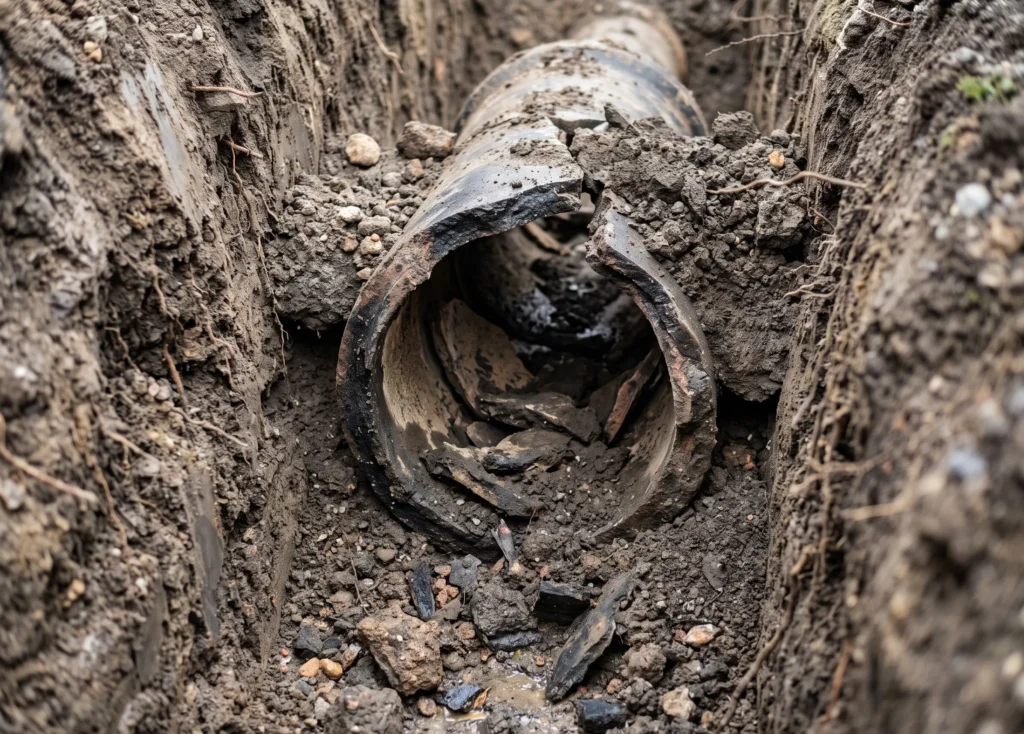
When October rain reaches the Pacific Northwest, saturated soil can put sudden stress on older sewer systems. Dry summer ground may tighten and shift, then autumn storms fill voids with water, soften support around buried pipes, and cause the surrounding earth to move. That movement can expose weaknesses in aging sewer lines.
If soil movement damages or blocks your main sewer line, a competent sewer line repair company can help reduce the risk of wastewater backing up into your basement.
Why Do Sewer Lines Collapse After Heavy Rain?
Heavy autumn rain saturates the soil around a sewer lateral, raises groundwater pressure, and can soften or wash away the support that keeps an aging pipe stable. Over time, that stress can crack, shift, or collapse vulnerable sections of underground sewer line.
The Mechanics of Soil Saturation and Pipe Collapse
Understanding how weather contributes to sewer damage helps you avoid spending money on temporary drain snaking. Chemical cleaners and standard plunging cannot correct a structural pipe failure.
Here is how autumn rain can compromise underground plumbing:
- Cause: October rain saturates the soil above and around the sewer lateral. As groundwater rises, the wet earth becomes heavier and less stable, while moving water can erode fine soil particles around the pipe.
- Effect: Aging clay or cast-iron pipes with cracks, corrosion, weak joints, or prior soil movement can shift, separate, sag, or collapse. A severe failure can restrict wastewater flow and may require professional repair or replacement.
Spot repairs can be a practical solution when camera inspection shows isolated damage. However, if the inspection reveals widespread deterioration, repairing only one section may not address the rest of the line.
The Reality of Repairing Underground Sewer Lines
Repairing a collapsed or severely damaged sewer pipe requires access to the underground line. When a pipe loses its shape or becomes blocked, wastewater may no longer drain properly to the municipal connection. A blocked, collapsed, or overwhelmed line can also cause wastewater to back up into lower-level drains.
A specialized underground crew evaluates the line, then excavates the damaged section when excavation is the appropriate repair method. The crew uses proper trench protective systems, such as shoring or shielding, based on the depth, soil conditions, and applicable safety requirements. After removing the damaged clay or corroded cast-iron section, the crew installs a code-approved replacement pipe.
Depending on the situation and local requirements, contractors may use PVC or HDPE pipe. These modern materials provide durable performance and can accommodate minor ground movement better than many deteriorated legacy pipes. Properly installed fittings and tight joints help reduce the risk of root intrusion and groundwater infiltration.
Spotting the Early Warning Signs of Structural Failure
Failing sewer lines often show warning signs before they collapse completely. Paying attention to these indicators can help you address a smaller problem before it becomes a larger, more disruptive repair:
- Gurgling Fixtures: Listen for gurgling sounds from downstairs toilets or drains when the washing machine drains or other fixtures are in use.
- Unexplained Soggy Patches: Watch for sudden wet, soft, or sunken areas in the yard, especially during relatively dry weather.
- Simultaneous Slow Drains: If several sinks, tubs, or toilets drain slowly or back up at the same time, the problem may be in the main sewer line rather than an individual fixture.
Hiring main sewer repair specialists for a video camera inspection when problems first appear can reveal cracks, joint separation, root intrusion, sagging, and other damage early. Catching a failing line before it fully collapses can reduce the repair’s scope, cost, and disruption.
Related Articles:
- How Seattle Sewer Repair Services Fix Collapsed Drain Lines
- How to Tell If You Need Tacoma Sewer Repair or Replacement
Stop Guessing and Fix the Real Problem
Pouring chemical drain cleaners down the kitchen sink will never fix a pipe crushed by three tons of wet dirt. A standard cable auger through a collapsed line will just pull back thick mud. You need a lasting structural fix from experienced local sewer repair crews to restore your property.
Sewer Solutions brings heavy equipment and deep utility experience to complex underground pipe breaks. Experienced technicians safely dig through saturated autumn soil, remove the crushed materials, and install modern pipes built to handle extreme ground pressure.
Stop letting bad weather dictate your plumbing stability. Contact Sewer Solutions today to book an expert sewer line repair company to protect your property against the next major storm.